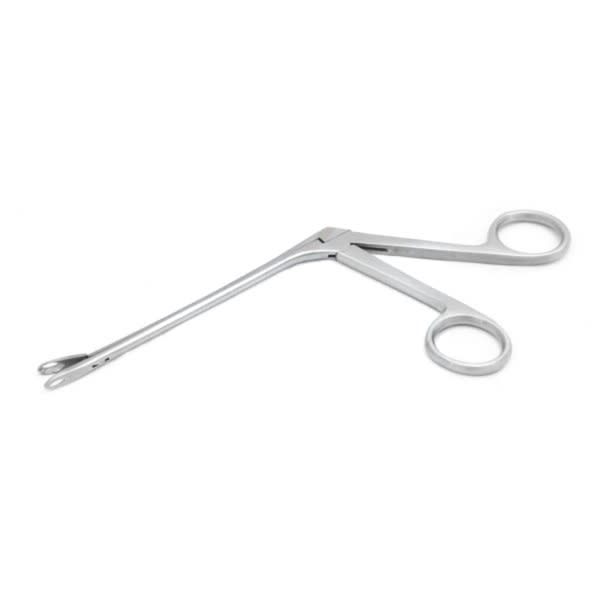
Key Facts
- Category
- ENT Instruments
- SKU
- CGS-ENT-001
- Sterilizable
- No
- Reusable
- Yes
Frequently Asked Questions
What are the clinical applications of Well-Blakesley Nasal Cutting Forceps?
Well-Blakesley Nasal Cutting Forceps are primarily designed for endoscopic sinus surgery, specifically in the removal of the bulla ethmoidalis and other ethmoidal air cells. Their precision and various jaw sizes allow for tailored interventions in complex nasal procedures.
How should Well-Blakesley Nasal Cutting Forceps be sterilized before use?
To ensure optimal performance and patient safety, Well-Blakesley Nasal Cutting Forceps should be sterilized using autoclaving methods or other validated sterilization processes recommended by healthcare institutions. It is crucial to follow the manufacturer's guidelines for sterilization to maintain the integrity of the surgical stainless steel.
What materials are Well-Blakesley Nasal Cutting Forceps made from?
These forceps are constructed from high-quality surgical stainless steel, ensuring durability and resistance to corrosion. This material choice enhances their longevity and reliability in surgical settings.
Are Well-Blakesley Nasal Cutting Forceps certified for medical use?
Yes, Well-Blakesley Nasal Cutting Forceps are produced in compliance with medical device regulations and standards, ensuring they meet the necessary certifications for surgical instruments. This guarantees their safety and efficacy in clinical applications.
What factors contribute to the durability of Well-Blakesley Nasal Cutting Forceps?
The durability of Well-Blakesley Nasal Cutting Forceps is attributed to the high-grade surgical stainless steel used in their manufacture, which resists wear and tear. Additionally, their precise engineering and design allow them to withstand the rigors of repeated use in surgical environments.
Can Well-Blakesley Nasal Cutting Forceps be customized for specific surgical needs?
Yes, Jimy offers various customization options for Well-Blakesley Nasal Cutting Forceps, including different jaw sizes (3 mm to 5.5 mm) and angles (0°, 45°, and 90°). This adaptability allows surgeons to select instruments tailored to individual procedural requirements.
Related Articles
10 Essential Surgical Forceps Every Surgeon Must Know
Unlock the secrets of surgical forceps that can transform your practice. Dive into the must-know types and elevate your surgical skills!
Jul 10, 2026
7 Reasons Why German Surgical Instruments Outshine Chinese Ones
Are you using the best surgical instruments? Discover the shocking differences between German and Chinese tools that could change your practice!
Jul 9, 2026
10 Game-Changing Surgical Instruments You Need Now!
Revolutionize your surgical practice with the best instruments reviewed by CareGear Suppliers. Don't miss out on these essentials!
Jul 8, 2026